
Power of Business Networking: How to Network Like a Pro and Build Relationships That Actually Matter
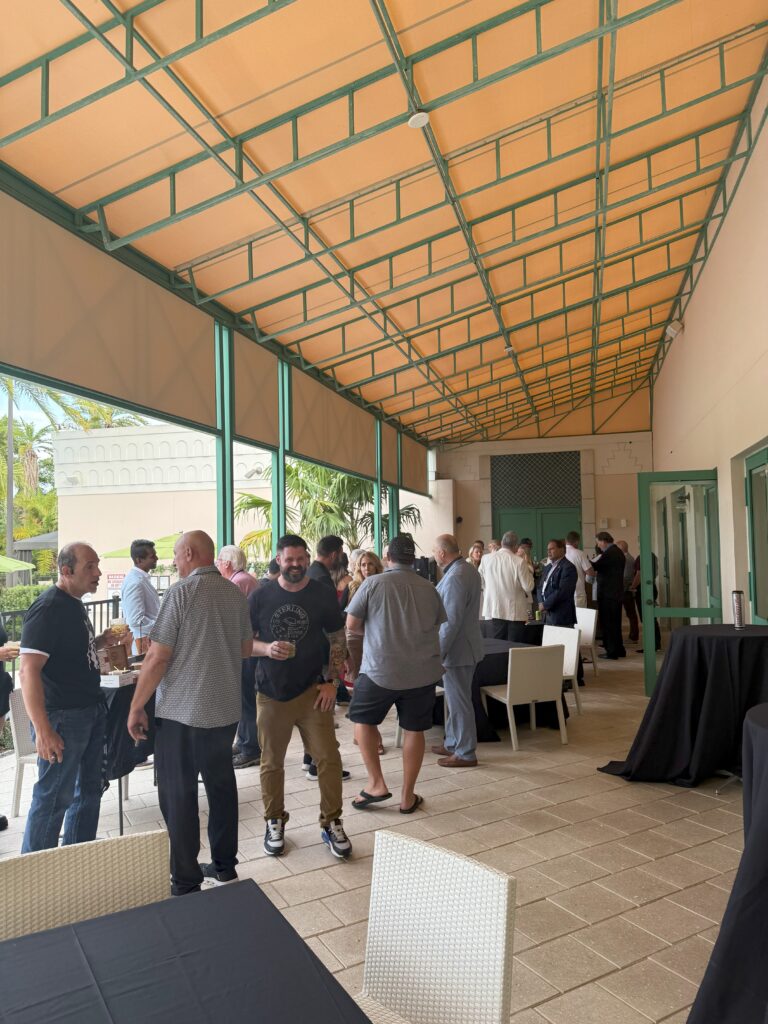
Lived By: Jimmy Ralph I’ve been in business long enough to tell you this:You can have the best idea, the best product, and the best plan in the world — but without the right people, you’ll never get far. In business networking is the key to surrounding yourself with the right people. Because no matter what industry you’re in, your business network will always determine your net worth. That’s not just a catchy quote; it’s the truth I’ve lived through 30+ years in entrepreneurship. Every major breakthrough I’ve ever had — from scaling Talk More Wireless to 200+ stores, to building SalesMakers, to now leading Board of Advisors — started with a conversation, a handshake, a connection. The Real Secret Behind Business Networking When most people hear the phrase business networking, they think of business cards, conferences, and small talk at cocktail parties.That’s not business networking. That’s collecting names. True networking is about creating value-based relationships — relationships that are built on trust, mutual respect, and shared goals. It’s not about how many people you know; it’s about how many people would pick up the phone when you call. Business networking isn’t a transaction. It’s a transformation — for both people involved. The right connection can open a door that would’ve taken you years to find on your own. It can help you skip steps, avoid mistakes, and collapse timelines. I’ve seen deals come together in five minutes at Board of Advisors that would take six months in the real world — because the foundation of trust already existed. That’s the magic of real networking. Lead With Value, Not With Need If there’s one mistake I see people make over and over, it’s this:They network with their hand out instead of their heart open. When you walk into a room thinking, “What can I get from these people?”, you’ve already lost.You have to walk in thinking, “What can I give?” That’s how you stand out. That’s how you earn respect.Because the truth is, people remember the ones who bring value — not the ones who pitch them. When I joined the Board of Advisors years ago, I didn’t join to sell. I joined to learn, to connect, and to help others win. Funny thing — when you focus on giving, you start getting more than you ever expected. That’s why the entire BA culture is built around three simple principles: It’s simple, but it changes everything. How to Build Relationships That Actually Last The best connections aren’t built overnight. They’re built through consistency, follow-through, and trust.Here’s what I’ve learned works best — and it’s not theory; it’s real-world, tested, and proven. Networking Isn’t About Luck — It’s About Intent People love to say, “You just got lucky — you met the right people at the right time.”No. Luck is what happens when preparation meets opportunity. Business networking is a skill. You can learn it, refine it, and use it intentionally to build momentum in your business and your life. You want better opportunities? Start by improving the rooms you walk into. I can’t count how many times I’ve heard someone say, “Man, if I could just meet the right investor, the right partner, the right mentor…” My answer is always the same:Then go where they are. They’re not hiding. They’re at the events, the dinners, the masterminds — surrounding themselves with other high-performers who think big, act fast, and give back. That’s where transformation happens. The Power of Community: Why You Need a Network That Scales With You The truth is, as you grow, your circle has to grow with you. If your business network doesn’t challenge you, it’s holding you back. You can’t expand your vision if everyone around you thinks small. That’s why I believe so deeply in community-based business growth.At Board of Advisors, we don’t just bring people together to talk — we bring people together to build. BA is a curated ecosystem of CEOs, founders, investors, and visionaries who are actively helping each other solve real problems. Every event, every panel, every dinner, every conversation has one goal: to help you scale faster by learning from those who already have. Inside the Board of Advisors Experience I’ve been part of a lot of business groups, but BA is different. It’s not about hype. It’s not about selling from stage. It’s not about who has the flashiest resume. It’s about results. It’s about execution. When you walk into a BA event, you’re walking into a room filled with people who’ve built, failed, rebuilt, and won — people who’ve weathered the storms and have the scars (and the lessons) to prove it. We talk about everything from scaling strategies and leadership development to AI, real estate, marketing, and succession planning. But at the heart of every session is one question: “How can we help each other win?” That’s what makes the BA Community a force multiplier. Because when you surround yourself with the right people, you don’t just get advice — you get acceleration. You get clarity. You get accountability. And that’s what every entrepreneur needs — not another course, not another app — but a group of people who truly get it. Business Networking Done Right Here’s what I’ve learned after decades in business:The people you meet today might be the reason your business thrives five years from now. You can’t predict which connection will change everything — but you can increase your odds by showing up, giving value, and staying consistent. One key to business networking is just being in the arena. Don’t trust me, ask “The Original Shark” on the hit TV show Shark Tank, “The Original Advisor” to Board of Advisors, Kevin Harrington. Kevin Harrington – Be in the Arena! Business networking isn’t a short-term play. It’s a lifelong advantage. And when it’s done right, it doesn’t just grow your business — it grows you. Final Thought: The BA Way At Board of Advisors, we’ve built a community that lives by a simple
The Toughness Advantage: Why Business Resilience Beats Talent Every Time
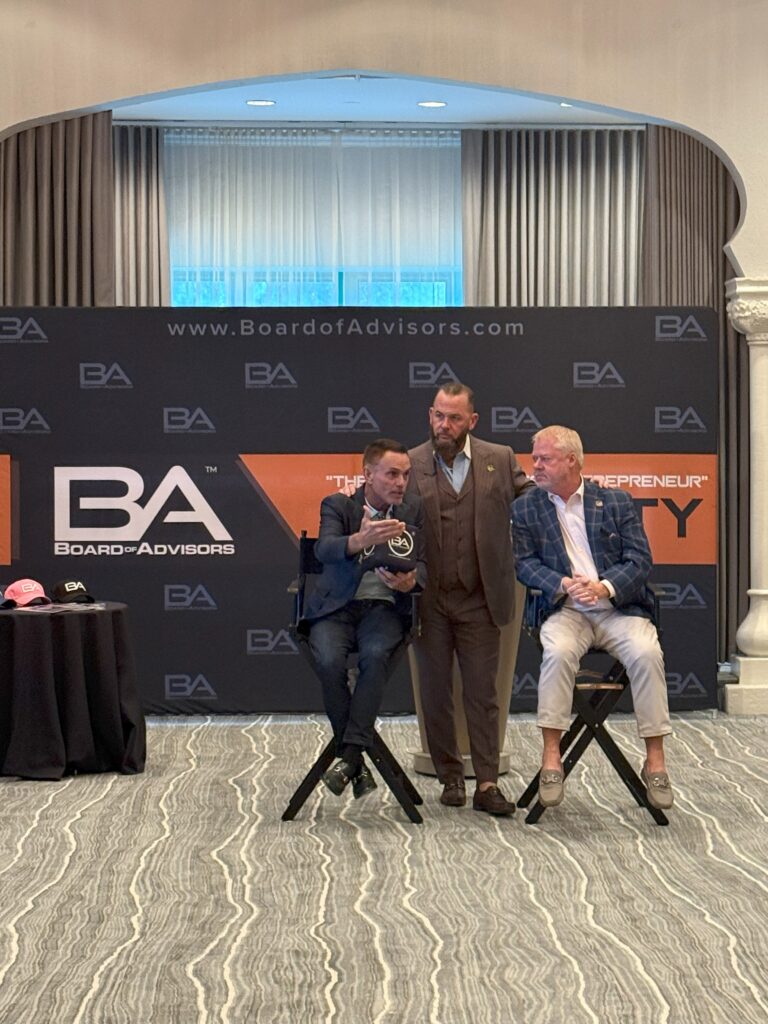
I’ve met a lot of smart people in business. Brilliant strategists, idea generators, analysts who could out-think anyone in the room. Most of them aren’t running companies anymore. Why? Because when things got hard, they folded. They didn’t lack intelligence — their business resilience was weak. The Difference Between Talent and Resilience Talent can start a business. Toughness keeps it alive. When markets turn, when funding dries up, when key hires quit — that’s when you find out who built business resilience. Entrepreneurs who survive aren’t necessarily the best educated or best funded; they’re the ones who can take a punch and keep moving forward. I’ve been through lawsuits, acquisitions, supply-chain collapses, and sleepless years of scaling. The constant? Pressure. The variable? How you handle it. Toughness isn’t about being fearless. It’s about acting despite fear. Your business has to be resilient, to have business resilience, you need to be tough, you need to have grit. The Mindset Shift: From Motivation to Discipline Motivation gets you started. Toughness keeps you going. When you build something from the ground up, there are mornings when you wake up excited — and mornings when you question everything. The founders who make it learn to show up anyway. Discipline beats motivation because it’s consistent. It doesn’t need permission. It doesn’t ask for energy or inspiration. It just executes. At Talk More Wireless, we didn’t grow from 7 stores to 200 by waiting for inspiration. We did it by doing the hard, boring, daily work that built systems strong enough to outlast emotions. TMW’s business resilience was unmatched. That business resilience led us through covid, through 3000% growth, and every other challenge imaginable. Pain Is the Tuition for Progress Most people want success without suffering. But to achieve business resilience, pain is the tuition. Every challenge teaches you something you can’t learn from a podcast or a seminar. The failed launches, the bad hires, the sleepless nights — those are lessons you pay for. And when you pay, you pay attention. Toughness means you stop running from the pain and start using it as feedback. The best entrepreneurs aren’t avoiding discomfort — they’re refining themselves through it. Consistency Compounds Like Interest People underestimate the power of consistency. It’s not sexy. It doesn’t go viral. But it builds empires. Every day you show up, hold the standard, and execute with precision, you’re compounding strength — just like compound interest in a bank. At SalesMakers, we trained and deployed 4,000 people in 12 weeks for Sprint. That wasn’t luck. It was consistency. The right systems, the right culture, and relentless follow-through. Most founders fail not because they stop believing, but because they stop being consistent when it stops being exciting. Toughness in Leadership If you’re the CEO, your toughness sets the tone. When things go wrong — and they will — your team looks to you. If you panic, they panic. If you stay calm, they rally. Leadership toughness isn’t about yelling or forcing control. It’s about standing tall when everyone else feels shaky. It’s showing your team that storms are temporary and execution is forever. The hardest part of leading isn’t managing others — it’s managing yourself. Toughness Is Contagious Energy travels fast in organizations. If you show up defeated, your team shrinks. If you show up strong, your team grows. Culture is just collective behavior repeated over time. Toughness at the top becomes resilience throughout. That’s how we scaled our companies. We didn’t just hire talent — we built toughness into the culture. We rewarded problem-solving, not complaining. Ownership, not excuses. And that mindset becomes a permanent competitive edge. The Toughness Advantage in a Changing World In 2025, the business landscape is moving faster than ever. AI is replacing tasks, markets are shifting overnight, and founders are burning out faster than they’re breaking even. What’s the advantage now? Mental endurance. The ability to adapt and stay consistent while everyone else is distracted. Technology levels the playing field, but toughness separates the winners. Final Thought You can buy strategy, hire talent, and copy systems — but you can’t outsource toughness. It’s something you earn through adversity, sharpen through repetition, and protect at all costs. When you feel like quitting, remember: the storm doesn’t last forever, but your toughness does. That’s the real advantage. Want to stay up to date with Jimmy Ralph?Follow Jimmy on LinkedIn | X (formerly Twitter) | YouTube | Instagram | Facebook for leadership insights, business lessons, behind-the-scenes updates, and more! Visit Board of Advisors website Board of Advisors magazine | Board of Advisors X | Board of Advisors Youtube | Board of Advisors Instagram
Why Business Communities are the #1 Key to the Future of Entrepreneurship
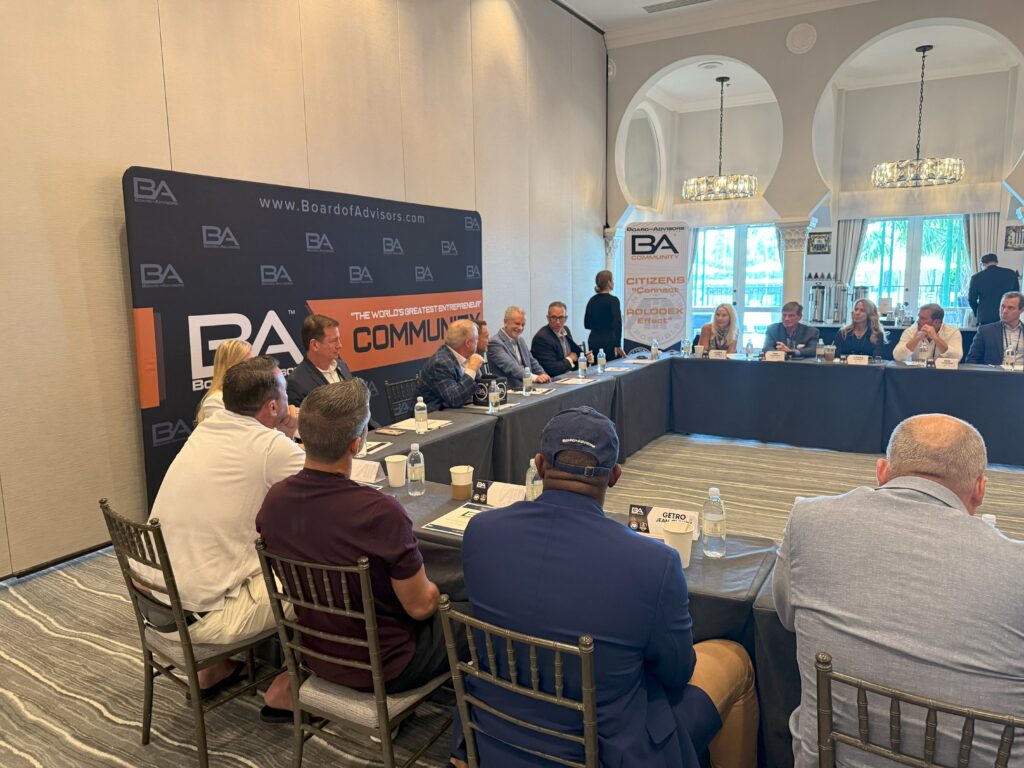
When I started my first company, business was simple — brick, mortar, inventory, and hustle. We opened one store, then two, then a few more. Back then, “community” meant the people you saw in your office every day. You didn’t think about national masterminds or global networks. You just worked. Business communities were malls! But as business evolved, I noticed something powerful: the people who grew the fastest weren’t just working harder. They were plugged in. They surrounded themselves with entrepreneurs who challenged their ideas, opened new doors, and expanded their perspective, they were part of communities. That’s when I realized the future of entrepreneurship isn’t built alone. It’s built in business communities. The Shift from Isolation to Connection Entrepreneurship used to be lonely. Founders were expected to figure everything out on their own — financing, hiring, scaling, strategy. You’d get advice from someone in your same industry, but everyone was fighting their own fires. Now, information is everywhere. AI can write a business plan, build a logo, or forecast your revenue. But what it can’t replace is trust. Relationships. Shared experience. In the AI era, knowledge is free. Wisdom is rare. And wisdom comes from people who have lived it. That’s why business communities like Board of Advisors are becoming the next evolution of entrepreneurship — they’re force multipliers that compress decades of learning into days. Why Communities Outperform Lone-Wolf Founders Every founder eventually hits a ceiling. It’s not about effort; it’s about perspective. When you’re surrounded by people doing what you’re doing, you develop tunnel vision. You make decisions based on your limited experience. Communities break that cycle by surrounding you with operators from completely different industries who bring fresh eyes to your problems. At Board of Advisors, we have members from real estate, tech, consumer goods, marketing, healthcare, AI — you name it. That diversity isn’t accidental. It’s strategic. When someone in software helps a retail CEO re-think logistics, or a real-estate investor helps a tech founder structure equity, that’s where growth happens. That’s the force multiplier effect — collaboration that amplifies everyone’s results. Give, Give, Give Every successful community needs a foundation, and ours is simple: Give. Give. Give. When entrepreneurs enter BA, we ask them to lead with value. Before you ask for anything, contribute. Share your insights, your network, your wins and your mistakes. That spirit of giving is what makes BA so powerful. It’s why deals happen faster. It’s why trust is built instantly. And it’s why people keep coming back — because it’s not transactional, it’s transformational. Why AI Makes Communities More Important, Not Less Some think AI will replace networking, mentorship, and collaboration. I see it the opposite way. AI is leveling the playing field. Anyone can now access data, tools, and playbooks that used to take decades to learn. So what separates the great from the average? Execution speed and human connection. In the next five years, your biggest competitive advantage won’t be code or capital — it’ll be relationships. The people who know you, believe in you, and open doors for you. Business communities give you those relationships. They’re accelerators of trust in a digital world that’s increasingly impersonal. The Board of Advisors Model When I joined Board of Advisors nearly a decade ago, it wasn’t because I needed another business contact. It was because I wanted a circle that pushed me to think bigger, faster, and smarter. Now, as CEO, I get to help curate that same experience for others. BA isn’t just a mastermind — it’s a movement. A collective of high-caliber leaders who understand that iron sharpens iron. At our events, you’ll see something rare in business: people who already have it all still showing up to help others win. That’s what community is. That’s what entrepreneurship should be. Relationships Are the Real ROI I’ve built companies that hit nine figures. But the most valuable thing I’ve ever built is a network of people I’d go to war with. The truth is, relationships outlast revenue. Your products will evolve, your markets will shift, your team will change — but your relationships, if built right, become your safety net and your growth engine. That’s why business communities matter. They’re not a luxury. They’re a necessity for the next generation of entrepreneurs. Final Thought Technology may be changing everything, but business will always be about people. The smartest founders I know are no longer asking, “How can I do this alone?” They’re asking, “Who can I do this with?” That’s the question that unlocks everything. Because when you surround yourself with the right people, in the right room, with the right intent — anything is possible. So if I can inspire one thing, business communities help you grow, become a part of one. If it’s right for you, check out boardofadvisors.com and bainvite.com to learn more about Board of Advisors. BA isn’t the only one, but it’s certainly the best of all business communities, it’s far beyond a mastermind! Want to stay up to date with Jimmy Ralph?Follow Jimmy on LinkedIn | X (formerly Twitter) | YouTube | Instagram | Facebook for leadership insights, business lessons, behind-the-scenes updates, and more! Visit Board of Advisors website Board of Advisors magazine | Board of Advisors X | Board of Advisors Youtube | Board of Advisors Instagram
Common Myths About Leadership and Growth That Hold Founders Back

Entrepreneurship is full of silly common myths. They spread through social media, conferences, and boardrooms until founders treat them as truth. Two of the most dangerous common myths? That leaders don’t need mentors and that growth is linear. If you want to scale, you need to erase both from your playbook. Common Myth #3: Leaders Don’t Need Mentors There’s this idea that once you reach the top—CEO, founder, entrepreneur—you no longer need mentors. That you’re supposed to have all the answers. That’s nonsense. Every great leader I know has advisors. They have communities. They surround themselves with people who’ve been there, done that, and can see blind spots they can’t. You are always going to be too involved to see certain things, sometimes, having someone see it from 10,000 feet can show you things you missed. Having someone you trust who can look at your business from a high level may help you see that the ocean of difficulty in front of you is actually a river to take you to success. When I was scaling SalesMakers and Talk More Wireless, I leaned on mentors constantly. I didn’t need them to run my business for me—I needed them to give me perspective, push me to think bigger, and challenge my assumptions. That’s why I believe so strongly in the Board of Advisors community. It’s not just a network—it’s a force multiplier. When you get 100+ entrepreneurs, investors, and operators in the same room, sharing real strategies and hard-won lessons, the collective brainpower elevates everyone. It takes iron sharpens iron to a whole new level! Being a leader doesn’t mean you stop learning. It means you learn faster, from smarter people, so you can make better decisions. Common Myth #4: Growth Is Linear The other common myth is that growth happens in a straight line. More effort, more money, more results—simple. But that’s not reality. Not even close. Growth is a wild ride! Growth happens in plateaus and leaps. You grind, you hit a wall, you refine your systems, you have a setback, you reach new limits, then you lose your best employee, but you stay with it and then “suddenly” you break through. I say “suddenly” because we all know there is nothing sudden about it. It is simply the result of your hundreds and thousands of hours of work finally coming to fruition. When we scaled to 200+ locations, it wasn’t smooth. There were times it felt like nothing was working. Sales stalled. Systems strained. Leadership stretched thin. There were late nights, early mornings, and some where one became the other. That’s entrepreneurship. But those weren’t failures—they were proving grounds. They forced us to fix what was broken, to strengthen the foundation before the next leap. They forced me to look in the mirror and evaluate what we were doing. It made me find ways to get better, to provide more, lead more, give more, and create more! Entrepreneurs who expect smooth growth get discouraged. They think they’re failing. But the ones who understand the rhythm—grind, plateau, breakthrough—know to stay in the fight long enough for momentum to kick in. The more resilient you are, the bigger your breakthroughs will be. The Takeaway Leaders need mentors. Growth isn’t linear. Those who ignore these truths end up frustrated, burnt out, and stuck. Don’t fall for those common myths. The entrepreneurs who scale are the ones who stay humble, stay coachable, and stay tough when progress feels slow. Success rewards the ones who keep showing up, keep surrounding themselves with the right people, and keep pushing through the plateaus. That’s what real growth looks like. Want to stay up to date with Jimmy Ralph?Follow Jimmy on LinkedIn | X (formerly Twitter) | YouTube | Instagram | Facebook for leadership insights, business lessons, behind-the-scenes updates, and more! Visit Board of Advisors website Board of Advisors magazine | Board of Advisors X | Board of Advisors Youtube | Board of Advisors Instagram
Dispelling Business Myths | Funding and Accountability

Every entrepreneur wants growth. But too often, growth is pursued through shortcuts, bad assumptions, and flat-out lies we tell ourselves. Two of the most dangerous business myths? That funding solves everything and that accountability kills culture. Both are common business myths. Both will wreck your business if you buy into them. And both deserve a closer look. Business Myths: Funding Solves Everything Let’s start with the funding business myths. Entrepreneurs talk about raising capital like it’s the magic cure. Get a big check and suddenly all your problems go away. But here’s the truth: money doesn’t fix broken systems. If your operations are messy, if your team lacks accountability, if your product isn’t solving a real problem—raising money only scales your problems. You need to have a plan to use the money to grow or all it does is cost you money! I’ve seen companies raise millions, sometimes hundreds of millions, and still collapse. Why? Because they believed money would buy them time, culture, execution, and leadership. But those things can’t be bought. They have to be built. It starts with the leader! You have to stand up be the culture setter, create the leadership! When we scaled Talk More Wireless, we didn’t start with raising massive rounds of outside capital. We scaled smart. We laid the ground work, we were ready to grow. We had reliable reporting and dashboards that told us the truth daily. We had Leaders who enforced consistency, and lived it themselves. Culture that didn’t flinch under pressure, it flourished. We were ready for the growth, therefore when we got supplied with dry powder, we were primed to explode! Funding, when used correctly, can accelerate what’s already working. But if nothing is working, funding just sets fire to the pile faster. When you’re prepared it can lead to growth like acquiring 20+ companies in 18 months, it can lead to going from 7 to over 200 locations nationwide. That’s the power of preparation, not funding. Business myths: dispelled. If you want to attract investors, start by showing you can run lean, execute relentlessly, and scale responsibly. Then—and only then—will capital act as fuel instead of an extinguisher. Business Myths: Accountability Kills Culture The second business myth is just as damaging, maybe more so because it can destroy your team. Too many leaders think holding people accountable will destroy their culture. They avoid hard conversations. They sugarcoat feedback. They tolerate underperformance in the name of “keeping the team happy.” Here’s the truth: lack of accountability is what kills culture. Your top performers want to win. They want to know where they stand. They want to know that their effort matters and that slackers aren’t being carried. The minute you stop holding the line, your best people either leave—or worse, stop trying. When you lose your top performers, you lose your business. If they realize they get the same result and treatment as the lazy performers, why should they continue to perform? Accountability is not micromanagement. It’s not yelling. It’s clarity. Clear expectations. Clear visibility. Clear ownership. When your team knows exactly what winning looks like, and they know how they’ll be measured, accountability stops feeling like punishment. It becomes alignment. At Talk More Wireless, we built culture through accountability. Real-time dashboards showed everyone the score. We didn’t guess who was doing well or who wasn’t—we knew. And that visibility created trust, not tension. Accountability paired with culture creates teams that execute at a high level. Without it, culture becomes chaos. The Takeaway Don’t fall for these common business myths. Funding is not a fix-all, and accountability is not the enemy of culture. The businesses that scale are the ones that build real systems, enforce real accountability, and use capital as fuel, not as life support. That’s how you turn fragile startups into durable powerhouse companies. Want to stay up to date with Jimmy Ralph?Follow Jimmy on LinkedIn | X (formerly Twitter) | YouTube | Instagram | Facebook for leadership insights, business lessons, behind-the-scenes updates, and more! Visit Board of Advisors website Board of Advisors magazine | Board of Advisors X | Board of Advisors Youtube | Board of Advisors Instagram
Founder Fatigue: How to Keep Going When the Grind Doesn’t Stop

Every entrepreneur eventually hits the wall. You’re exhausted. You’ve put everything into the business. And no matter how hard you work, it feels like the results aren’t coming fast enough. This happens to everyone. That feeling has a name: founder fatigue. And if you’re not careful, it can take you out of the game. If you learn to leverage it, you can realize it’s power and make that fatigue your reminder. When you’re fatigued it’s usually not just the time you are putting in, it’s what you are getting out. The truth is, entrepreneurship isn’t for everyone. It’s not just about vision and ideas. It’s about toughness. The ability to keep swinging when everything feels stacked against you. Toughness Wins Where Talent Fails I’ve worked with some of the smartest people in the world—brilliant operators, highly educated leaders, and entrepreneurs with million-dollar ideas. But I’ve also watched many of them quit. Why? Because talent alone doesn’t keep you in the fight. Toughness does. You are going to get hit with things you didn’t see coming, you are going to have people quit, you are going to have vendors fail, you are going to lose funding, those things are non-negotiable. The thing you can determine is how you react to them. Business is a contact sport. It’s not clean. It’s messy, unpredictable, and unforgiving. And when fatigue sets in, only toughness keeps you moving forward. Remain tough, remain grounded in why. The Power of Your “Why” So how do you fight through founder fatigue? You anchor yourself in your “why.” For me, it’s my family—my wife, my kids, my grandkids. They’re the reason I show up every day, even when I don’t feel like it, especially when I don’t feel like it. Founder Fatigue gets to everyone and if you want to combat it you need a strong why, a why that is stronger than all the why not’s. When you’re in the storm, your “why” becomes the compass. It reminds you that the struggle isn’t meaningless—it’s building something that matters. If your why isn’t strong enough, the grind will eat you alive. Delegate, Trust, and Recharge Here’s another truth: you can’t do it all alone. Founder fatigue often comes from refusing to delegate. You carry every burden, every task, every decision. Eventually, it breaks you. Build leaders around you. Put systems in place. Create a culture where the weight is shared. That doesn’t make you weak—it makes you scalable. you need to be able to delegate tasks to people you trust and people you know will come through. If you have the right team around you this can be the easiest part, if not, it can be the downfall of your entire company. And when you can trust your team, you give yourself permission to recharge. That clarity fuels longevity. It’s Not for Everyone Entrepreneurship looks glamorous from the outside. But on the inside, it’s long nights, constant risk, and relentless pressure. Many people simply aren’t built for it. And that’s okay. But if you are built for it—if you’re tough enough to keep showing up when it’s hardest—you’ll separate yourself from 99% of founders. Because most people quit too early. Final Thought: Fatigue Is the Proving Ground Founder fatigue isn’t failure. It’s the proving ground. It’s where toughness is tested, and where breakthroughs happen if you refuse to quit. If you’re in that season now, don’t misread it. You’re not at the end—you’re at the point where persistence will pay off. Stay tough. Stay focused. Stay anchored in your why. That’s how you keep going when the grind doesn’t stop. Want to stay up to date with Jimmy Ralph?Follow Jimmy on LinkedIn | X (formerly Twitter) | YouTube | Instagram | Facebook for leadership insights, business lessons, behind-the-scenes updates, and more! Visit Board of Advisors website Board of Advisors magazine | Board of Advisors X | Board of Advisors Youtube | Board of Advisors Instagram
How to Build Teams That Win Without You in the Room

Here’s a tough truth most founders don’t like to hear: if everything still depends on you, you didn’t build a business—you built yourself a job. I’ve scaled businesses from a handful of employees to thousands, across hundreds of locations. And the difference between companies that grow and companies that scale always comes down to one thing: the team. If you want to scale, you need to build teams that win without you in the room. Empower Leaders, Not Followers Too many entrepreneurs make the mistake of hiring people to execute tasks but never giving them ownership. That creates dependency. Every decision flows back to you, which means your business hits a ceiling fast. Leaders set the vision.Managers build the systems.Teams execute the playbook. Your job as a founder is to empower people to own their outcomes. When you delegate ownership—not just responsibility—you create leaders who can carry the business forward even when you’re not around. Systems Create Consistency Delegation without systems is chaos. You can’t just throw tasks at people and hope for the best. Scaling requires a clear operating framework where everyone knows the standard and how success is measured. That’s why I built Ever Present Management (EPM). It gave us real-time visibility across hundreds of retail stores. We could see sales, compliance, and culture scores daily. There was no guessing. You can’t guess at scale, and trust me, you wouldn’t want to anyways because you aren’t as good at it as you think you are! When you really have the details you start to see who the actual top performers are vs who you thought, you start to see the real managers for the top sales people, small nuances become clear with the right data in the right systems. When you have systems, your team can be trusted. They know what winning looks like, and they have the tools to hit the target. Culture as the Glue Systems alone don’t scale. Culture makes the system stick. I’ve always said: anyone can copy your product, but no one can copy a culture that out-works, out-cares, and out-executes. That culture starts at the top. If you tolerate mediocrity, your team will too. If you show up consistent, they will too. You have to be the culture setter, the culture leader, and the chief of culture protection. We certainly don’t need CCP culture, but we could all use a Chief of Culture Protection. The real multiplier comes when your culture is so strong that people execute at a high level without needing your approval at every turn. The Real Test of Leadership The ultimate test of leadership isn’t what happens when you’re in the room. It’s what happens when you’re not. Do people rise to the occasion or wait for direction? Do they protect the culture or let it slide? Do they keep momentum alive or let it stall? If your team can’t operate without you, you’ve built dependency—not leadership. And dependency is the enemy of scale. Final Thought: Stop Building Jobs, Start Building Businesses Scaling is about building teams that win without you. That’s how you create freedom. That’s how you create value. And that’s how you create a business that can survive—and thrive—beyond your personal bandwidth. Don’t just build a job for yourself. Build a team that can win the game whether or not you’re on the field. That’s leadership. That’s scale. Want to stay up to date with Jimmy Ralph?Follow Jimmy on LinkedIn | X (formerly Twitter) | YouTube | Instagram | Facebook for leadership insights, business lessons, behind-the-scenes updates, and more! Visit Board of Advisors website Board of Advisors magazine | Board of Advisors X | Board of Advisors Youtube | Board of Advisors Instagram
Why Business Communities Are the Future of Entrepreneurship: The Ultimate Force Multiplier

Entrepreneurship has always been a lonely road. You carry the risk, make the decisions, and take the hits when things go wrong. But one thing I’ve learned after building companies in volatile industries like telecom, retail, and staffing is this: you can’t build something great alone. The right people around you are the ultimate force multiplier. They amplify your efforts, sharpen your ideas, and shorten your path to success. And in today’s world—where AI gives everyone access to the same information—the difference-maker isn’t knowledge. It’s relationships. The Force Multiplier Effect So, what exactly is a force multiplier? It’s something that dramatically increases the impact of your efforts without requiring the same increase in input. In the military, it might be advanced technology. In business, it’s your network. One great introduction can save you six months of wasted time.One conversation with the right operator can show you how to fix a broken system.One piece of advice from a seasoned entrepreneur can prevent a million-dollar mistake. That’s the multiplier effect. Alone, you might figure it out eventually. With the right people, you move faster and smarter. Why the BA Community Works At Board of Advisors (BA), I’ve seen this force multiplier effect in action more times than I can count. BA isn’t just another mastermind or networking event. It’s a curated room of founders, CEOs, and investors who show up ready to give, not just take. The rule is simple: Give. Give. Give. When you put high-level people in the same room with a give-first mentality, something powerful happens. Deals get done. Strategies get refined. And people leave the room better than they walked in. It’s not theory—it’s execution. Cross-Industry Learning = The Real Advantage Here’s the trap many entrepreneurs fall into: they only network with people in their own industry. It feels safe because everyone speaks the same language. But it also creates tunnel vision. If you’re in telecom and only learn from telecom, you inherit the same blind spots as your competitors.If you’re in real estate and only network with real estate, you miss the innovations happening in tech or marketing. At BA, you’ll see a tech founder sitting next to a real estate investor, next to a franchise builder, next to a doctor-turned-entrepreneur. The cross-industry perspective is priceless. You learn different playbooks, and you start seeing solutions you’d never find inside your own bubble. That’s why curated communities become such a powerful force multiplier. They don’t just add value—they compound it. Why Relationships Still Beat AI AI can write code. It can summarize books. It can even draft contracts. But it can’t build trust. It can’t form real relationships. It can’t look you in the eye and say, “I’ve been there. Here’s how I made it through.” That’s why communities will only grow in importance in the AI age. Knowledge is becoming a commodity. Relationships will be the new currency. When you’re surrounded by entrepreneurs who’ve faced the same struggles, solved the same problems, and taken the same risks, you don’t just learn—you grow. Final Thought: Find Your Force Multiplier The longer I’m in business, the more convinced I am: entrepreneurship is a team sport disguised as an individual journey. The right community will compress years into months, prevent failures, and give you the clarity to keep moving forward. That’s why business communities like Board of Advisors aren’t optional anymore. They’re the future. Because at the end of the day, your network isn’t just a support system—it’s your force multiplier. Want to stay up to date with Jimmy Ralph?Follow Jimmy on LinkedIn | X (formerly Twitter) | YouTube | Instagram | Facebook for leadership insights, business lessons, behind-the-scenes updates, and more! Visit Board of Advisors website Board of Advisors magazine | Board of Advisors X | Board of Advisors Youtube | Board of Advisors Instagram
Jimmy Ralph: Scaling Businesses, Building Systems, and Leading the Board of Advisors

When people search for Jimmy Ralph, they’re looking for more than a résumé. They’re looking for lessons—proof that leadership at scale is possible. And they find it in a career that spans decades, multiple industries, and businesses that have grown to national dominance. From plowing driveways as a teenager in Ohio to building SalesMakers, Talk More Wireless, and now serving as CEO of the Board of Advisors, Jimmy Ralph has always embodied toughness, clarity, and execution. His journey shows what it takes to lead at the highest levels—systems, culture, and relentless consistency. The Early Entrepreneurial Drive Jimmy Ralph’s entrepreneurial spark lit early. At eight years old, he and his brother convinced their grandfather to give them a tractor. They turned it into a snowplowing business on the icy shores of Lake Erie. The lesson? People will pay for results when you show up in conditions most can’t endure. That toughness never left. By 16, Jimmy walked into a dealership and bought a Monte Carlo for cash. It wasn’t about the car—it was about proving what relentless effort could produce. Those early ventures taught him the DNA of entrepreneurship: see a need, take the risk, and execute faster than anyone else. SalesMakers: Building at Scale The real proving ground came with SalesMakers, Inc. Jimmy’s national sales execution company that staffed and trained thousands of employees for brands like Microsoft, Sprint, TracFone, and Samsung. One of the most remarkable feats? Hiring, training, and deploying over 4,000 employees in just 12 weeks to staff Sprint kiosks inside RadioShack locations across the country. Few companies could’ve handled it. SalesMakers not only executed—it dominated. That was only possible because of the system Jimmy and his team developed: Ever Present Management (EPM). Ever Present Management: A System Ahead of Its Time EPM was revolutionary in its day. Long before Zoom and virtual dashboards became common, Jimmy created a command center in St. Petersburg where leaders could oversee hundreds of employees in real time. It wasn’t just efficiency—it was visibility. And visibility created accountability. The result? SalesMakers could deliver outcomes at a price and speed no competitor could match. That discipline of measurement and real-time data became the backbone of everything Jimmy scaled afterward. Talk More Wireless: Turning the System on His Own Business After years of building systems for others, Jimmy turned the model inward. With EPM as the engine, he and his team acquired nearly 40 companies and scaled Talk More Wireless to over 200 Metro by T-Mobile stores in 18 states. What made it possible? The same principles that fueled SalesMakers: Talk More Wireless wasn’t just another retailer—it became America’s #1 Metro by T-Mobile dealer. And when it came time to exit, the business was valuable not just for its size, but because it could run without Jimmy in the room. That’s the mark of real scale. From Operator to CEO of Board of Advisors In 2025, Jimmy Ralph stepped into his newest role: CEO of Board of Advisors (BA). Board of Advisors isn’t a typical mastermind—it’s a curated community of elite entrepreneurs, CEOs, and investors. For nearly 10 years, Jimmy was a member. Now, he’s leading the entire organization alongside Founder Mike Calhoun. Why is he the right leader? Because he’s lived the challenges every entrepreneur in the room faces: raising capital, acquiring companies, building culture, leading through adversity, and scaling beyond personal capacity. Jimmy doesn’t just speak theory. He’s been in the trenches. He’s fought the battles. And now he’s using those lessons to multiply the impact of hundreds of other entrepreneurs inside BA. The Mindset: Toughness Wins If there’s one throughline across Jimmy Ralph’s journey, it’s toughness. Business isn’t clean—it’s a contact sport. And toughness isn’t just about enduring—it’s about charging forward, like the rhino in Jimmy’s favorite book Rhinoceros Success. That mindset now fuels the BA Community, where entrepreneurs are encouraged to give, grow, and charge through challenges together. Final Takeaway The story of Jimmy Ralph isn’t just about building companies—it’s about building systems, cultures, and communities that can outlast any obstacle. From SalesMakers to Talk More Wireless to Board of Advisors, his journey proves one thing: Scaling isn’t about working harder. It’s about building the machine. And toughness—relentless, disciplined, uncompromising toughness—is what keeps that machine running when storms come. Want to stay up to date with Jimmy Ralph?Follow Jimmy on LinkedIn | X (formerly Twitter) | YouTube | Instagram | Facebook for leadership insights, business lessons, behind-the-scenes updates, and more! Visit Board of Advisors website Board of Advisors magazine | Board of Advisors X | Board of Advisors Youtube | Board of Advisors Instagram
The Power of Board of Advisors: Why Your Network is Your Greatest Competitive Advantage in 2025

Lived By: Jimmy Ralph In 2025, being surrounded by successful business leaders is more important than ever. That’s why in this rapidly changing world the BA Community at Board of Advisors has never been more valuable! For decades, having more knowledge than your competitors was the surest way to win. But today? AI has leveled the playing field. Information is no longer scarce—it’s abundant. Every entrepreneur has access to powerful tools, deep market data, and insights once reserved for the elite. If everyone has the same access to knowledge, the question becomes: What’s the real differentiator? It’s not the tools you use. It’s not the software you subscribe to.It’s the people you surround yourself with—your business community. Why Business Communities Are More Valuable Than Ever The best business communities aren’t networking groups. They’re force multipliers. When you’re part of a curated business community—one built on trust, contribution, and high standards—you tap into more than just advice. You access deal flow, partnerships, and solutions you can’t Google. In the Board of Advisors (BA) Community, I’ve seen founders walk in with a problem and walk out with a funding partner, a new acquisition target, or a proven system to fix their operational bottleneck. It’s not magic—it’s the result of putting the right people in the right room and making generosity the currency. AI Makes Relationships More Valuable, Not Less In the AI era, the “what” of business is increasingly automated. The “how” is faster than ever. But the “who”—the human relationships that turn ideas into execution—are more valuable than they’ve ever been. Why? Because execution still depends on trust. You might get data from an AI model, but you’ll close a deal because someone in your network picks up the phone and says, “Yes, I know them. You can trust them.” That’s something no algorithm can replicate. How Business Communities Give You the Edge Choosing the Right Business Community Not all business communities are equal. You’ll never get the value you want out of it if you only go in looking for the value you get. If you go in looking to give, you’ll realize you get substantially more than you give. That’s the magic of the BA Community, it works as a force multiplier to catapult your business to new levels. Final Thought In a world where AI can level the knowledge playing field, your competitive advantage is the strength of your business community. The right relationships will help you solve problems faster, find opportunities sooner, and make better decisions than any single tool or data set ever could. Business has always been about people—but in 2025, it’s only about people. That is how you separate yourself in a world of AI. Want to stay up to date with Jimmy Ralph?Follow Jimmy on LinkedIn | X (formerly Twitter) | YouTube | Instagram | Facebook for leadership insights, business lessons, behind-the-scenes updates, and more! Visit Board of Advisors website Board of Advisors magazine | Board of Advisors X | Board of Advisors Youtube | Board of Advisors Instagram
