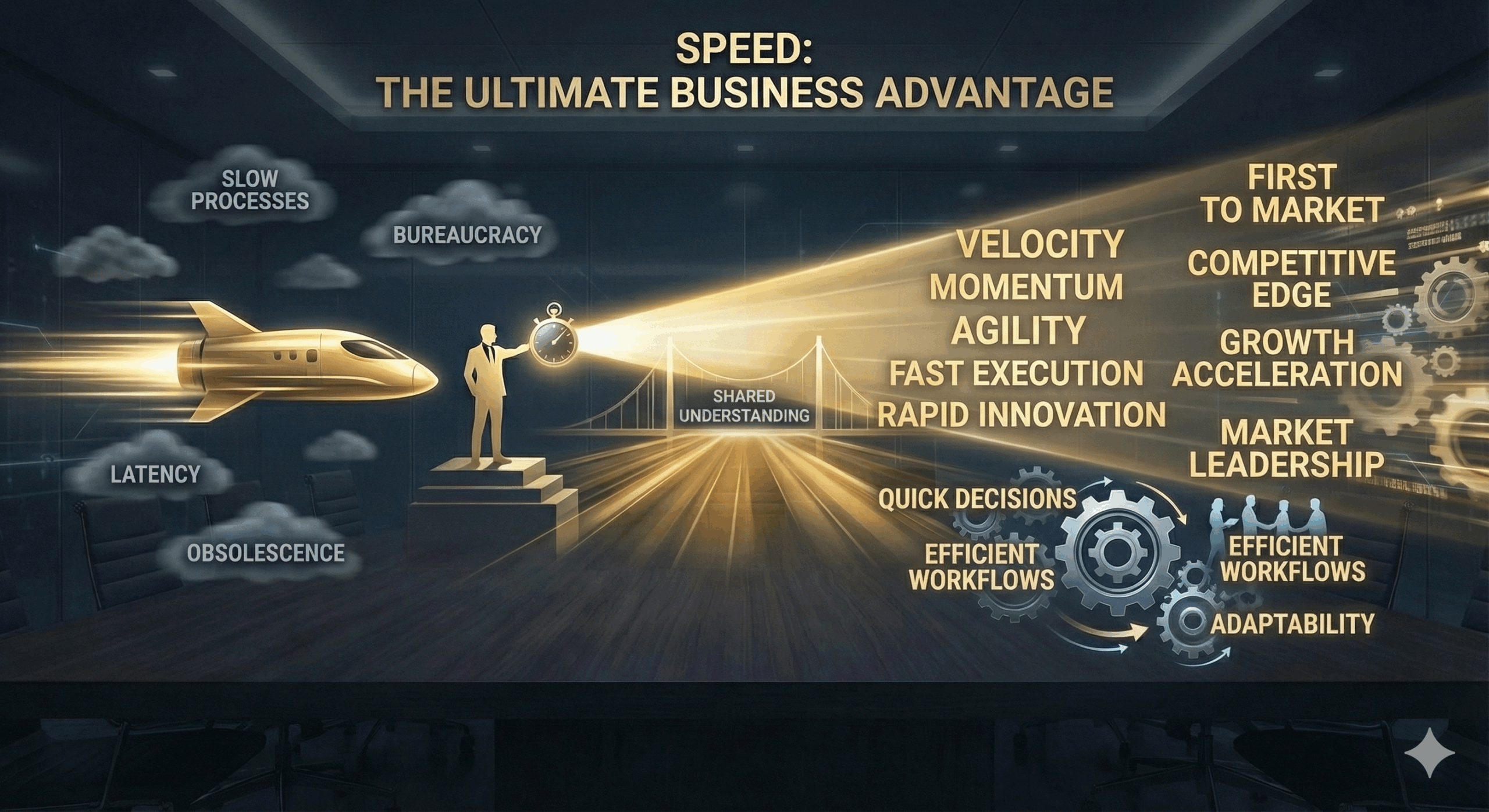
Why Do the Fastest Companies Consistently Win?
In nearly every industry, the winners are not always the smartest, best funded, or most experienced. They are the fastest. They move first. They adapt quicker. They execute sooner. Over time, that speed compounds into dominance.
Jimmy Ralph has led organizations through rapid growth, acquisitions, competitive retail environments, and national expansion. Across all of it, one principle proved reliable: the company that moves faster than the market eventually controls it.
Speed is not about rushing. It is about reducing friction between decision and execution.
Speed Is Not Recklessness, It Is Discipline
One of the biggest misconceptions in leadership is that moving fast means being careless. In reality, true speed requires discipline.
Fast organizations:
- Decide quickly
- Execute cleanly
- Review outcomes
- Adjust immediately
Slow organizations overanalyze, delay decisions, and miss windows of opportunity. Speed forces focus. It eliminates unnecessary debate and channels energy toward execution.
Jimmy has always emphasized that speed comes from structure. When systems are clear, people move confidently. When standards are defined, execution accelerates.
Why Speed Matters More Than Perfect Information
Waiting for perfect information is one of the most common ways leaders slow themselves down. Markets move too quickly for certainty.
The best leaders understand:
- Most decisions can be corrected
- Delay often causes more damage than mistakes
- Momentum matters
Speed allows leaders to learn faster than their competitors. Every action produces feedback. Every delay produces stagnation.
Jimmy’s leadership approach favors informed action over prolonged hesitation. Speed creates learning loops that slow organizations never experience.
How Speed Creates Momentum Inside Organizations
Momentum is a force multiplier. When teams see decisions being made and actions being taken, confidence grows.
Speed creates:
- Energy
- Alignment
- Trust
- Ownership
- Accountability
Slow decision-making creates doubt. Teams hesitate when leadership hesitates. When leaders move with speed, teams follow.
Momentum does not come from speeches. It comes from action.
Why Speed Is Critical During Growth
Growth increases complexity. Complexity punishes slow leadership.
As organizations scale:
- More people need direction
- More decisions must be made
- More opportunities appear
- More problems surface
Without speed, growth becomes overwhelming. With speed, growth becomes manageable.
Jimmy experienced this while scaling multi-location businesses. Speed in hiring, training, and operational decisions kept growth from stalling. Delays would have cost momentum and market position.
Speed keeps growing organizations aligned.
Speed and Accountability Are Directly Connected
Accountability thrives in fast-moving organizations. When decisions and follow-ups happen quickly, standards stay visible.
Speed reinforces accountability by:
- Shortening feedback loops
- Reducing excuses
- Making results obvious
- Preventing drift
Slow environments allow problems to hide. Fast environments expose them early.
Jimmy’s operational philosophy always emphasized quick reviews and immediate correction. Speed keeps accountability real instead of theoretical.
Why Speed Protects Culture
Culture weakens when organizations hesitate. Delays create uncertainty. Uncertainty creates fear. Fear erodes culture.
Speed stabilizes culture by:
- Providing direction
- Demonstrating leadership confidence
- Reinforcing standards
- Showing commitment
When leaders act decisively, teams feel secure. Speed sends a message that leadership is present and engaged.
Culture improves when people trust leadership to move forward.
How Leaders Increase Speed Without Burning Out Teams
Speed does not mean chaos. Leaders increase speed by simplifying.
Effective leaders:
- Clarify priorities
- Eliminate unnecessary meetings
- Define decision rights
- Empower teams
- Reduce approval layers
Speed increases when leaders stop overcomplicating. Jimmy has always focused on removing friction rather than applying pressure.
The goal is smooth execution, not frantic activity.
Why Speed Wins in Competitive Markets
Markets reward first movers. Competitors who hesitate fall behind.
Speed allows companies to:
- Capture opportunities early
- Adjust pricing faster
- Respond to customer needs
- Improve products quickly
- Outlearn competitors
Jimmy’s experience in competitive retail environments reinforced this truth. Speed created separation. Slow competitors struggled to catch up.
Once momentum shifts, it is difficult to reverse.
Speed as a Leadership Signal
Speed communicates confidence. When leaders move decisively, teams trust their judgment.
Indecision communicates doubt. Teams lose faith when leadership delays.
Speed tells the organization:
- We know where we’re going
- We’re willing to act
- We’ll adjust if needed
Leadership presence is felt through action, not intention.
Why Speed Is a Habit, Not a Trait
Some leaders believe speed is innate. It is not. Speed is learned.
Leaders develop speed by:
- Practicing decision-making
- Accepting imperfection
- Building systems
- Delegating effectively
- Trusting their teams
Jimmy’s ability to move quickly was developed over decades of experience. Speed came from repetition, not personality.
The Compounding Effect of Speed Over Time
Small advantages in speed compound dramatically. A company that moves 10 percent faster each year eventually creates massive separation.
Speed compounds through:
- Faster learning
- Faster hiring
- Faster execution
- Faster adaptation
Over time, competitors cannot close the gap.
This is why speed is such a powerful advantage. It quietly multiplies everything else.
Final Thought: Speed Turns Potential Into Results
Ideas are worthless without execution. Execution is powerless without speed.
Speed transforms plans into action and effort into outcomes. It allows leaders to capitalize on opportunities while others are still debating.
Jimmy Ralph’s career demonstrates this clearly. Speed was not reckless. It was intentional, structured, and disciplined.
If you want to compete at a high level, stop waiting.
Clarify, decide, act, adjust, repeat.
In business, the fastest learner usually wins.
Speed makes that possible.
Want to stay up to date with Jimmy Ralph?
Follow Jimmy on LinkedIn | X (formerly Twitter) | YouTube | Instagram | Facebook for leadership insights, business lessons, behind-the-scenes updates, and more!
Visit Board of Advisors website
Board of Advisors magazine | Board of Advisors X | Board of Advisors Youtube | Board of Advisors Instagram