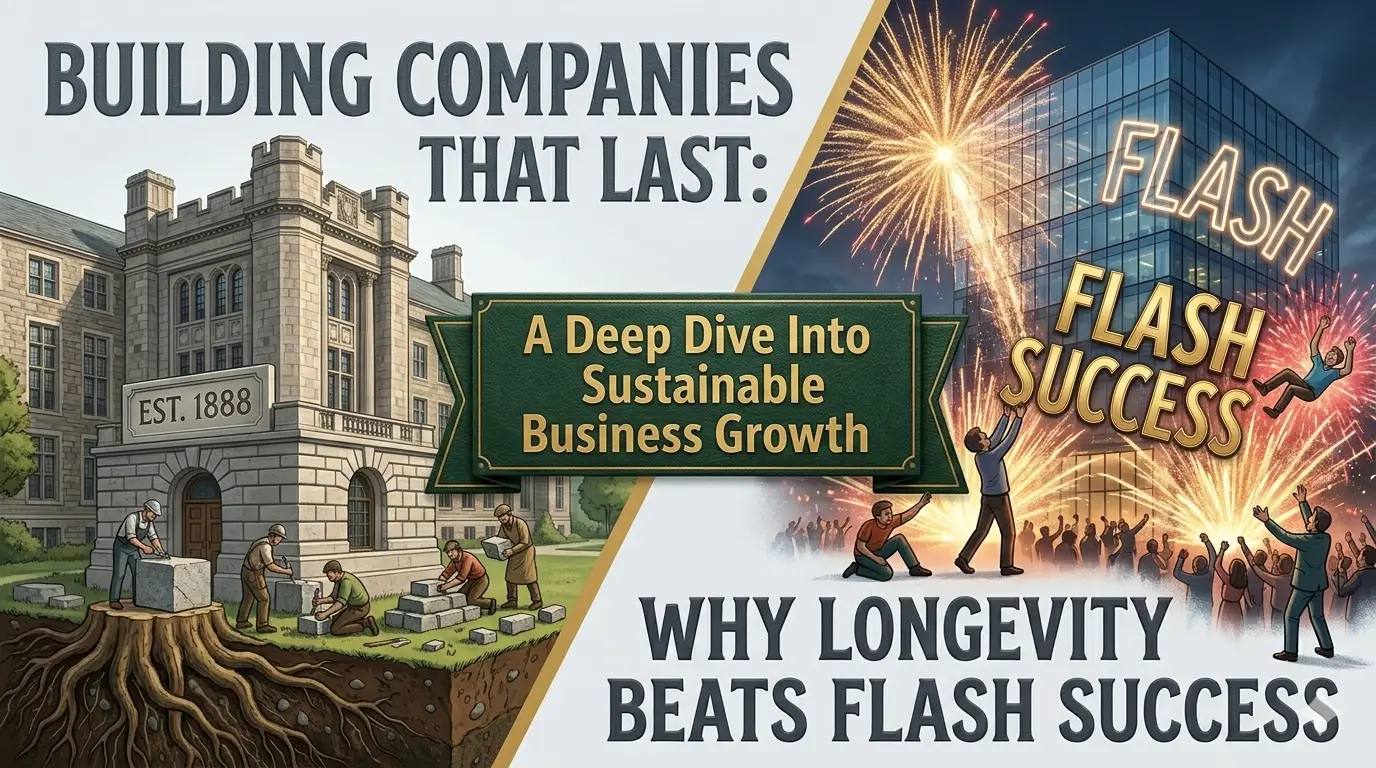
Why Longevity Is the Real Competitive Advantage
In today’s business environment, attention is rewarded. Headlines celebrate rapid exits, viral growth, and overnight success. Short-term wins are amplified. Patience is rarely discussed.
But the leaders who build enduring companies focus on longevity.
Jimmy Ralph’s career has not been built on flash moments. It has been built on sustained execution, disciplined leadership, and long-term thinking. Over decades of building and scaling companies, one principle stands out clearly: short bursts of success are easy to create. Longevity is difficult.
Longevity requires discipline that extends beyond one strong year or one strong acquisition. It demands consistency over decades.
Longevity Requires Long-Term Thinking
Short-term thinking optimizes for quarterly gains. Long-term thinking optimizes for durability.
Longevity is driven by decisions that consider:
- Brand reputation
- Leadership succession
- Financial resilience
- Operational systems
- Culture sustainability
Jimmy has consistently emphasized that leaders must think beyond immediate returns. Capital allocation, hiring decisions, and expansion strategies must be evaluated not only for immediate gain but for long-term viability.
Longevity forces leaders to consider consequences that are not immediately visible.
Why Flash Success Often Fades
Rapid growth can mask structural weaknesses.
Companies that experience explosive expansion without systems often encounter:
- Cultural breakdown
- Financial strain
- Leadership fatigue
- Operational inconsistency
Without a long-term lens, early success can create overconfidence.
Jimmy has seen businesses grow quickly and then retract just as fast. The difference between flash success and longevity lies in infrastructure. Systems, standards, and discipline determine whether growth can be sustained.
Longevity is engineered. It is not accidental.
Discipline Is the Foundation of Longevity
Longevity demands restraint.
Leaders must resist:
- Overleveraging during expansion
- Chasing every opportunity
- Lowering hiring standards to scale faster
- Sacrificing culture for speed
Jimmy’s approach to building companies has consistently included disciplined reinvestment and measured expansion. Sustainable growth outperforms reckless acceleration.
Longevity requires leaders to say no more often than yes.
Hiring for Longevity, Not Convenience
Talent determines durability.
Hiring for short-term output often leads to misalignment. Hiring for longevity requires evaluating:
- Character
- Ownership mindset
- Adaptability
- Alignment with core standards
Jimmy has consistently prioritized leaders who think like owners and commit for the long term. Short-term contributors can deliver immediate results. Long-term operators build institutional strength.
Longevity is protected through disciplined hiring.
Financial Strength Protects Longevity
Financial discipline is a cornerstone of long-term success.
Companies focused on longevity emphasize:
- Cash flow visibility
- Margin protection
- Conservative leverage
- Strategic reinvestment
Short-term thinking often prioritizes aggressive expansion without sufficient financial buffer. Longevity demands capital awareness.
Jimmy’s leadership experience across telecom and retail reinforced this lesson repeatedly. Financial clarity allows leaders to endure downturns and capitalize on opportunity when competitors retract.
Longevity is built on financial resilience.
Systems Create Durability
Founder-led hustle drives early traction. Systems sustain longevity.
Clear operational systems provide:
- Consistent customer experience
- Measurable performance
- Defined accountability
- Scalability without chaos
Jimmy has repeatedly reinforced that effort does not scale. Systems do.
Organizations that fail to build repeatable infrastructure struggle to maintain longevity. Variability increases. Quality declines. Leadership stress rises.
Longevity requires structure.
The Role of Reputation in Longevity
Reputation compounds over time.
Short-term wins may generate attention, but longevity builds trust. Trust attracts talent, partners, and opportunity.
Jimmy’s career reflects a consistent emphasis on reputation. Integrity, standards, and accountability are not marketing tools. They are durability mechanisms.
Longevity is strengthened when leaders protect their credibility relentlessly.
Why Long-Term Thinking Is Uncomfortable
Longevity often requires delayed gratification.
Leaders must choose:
- Sustainable growth over explosive expansion
- Cultural protection over rapid hiring
- Financial prudence over aggressive leverage
- Patience over immediate validation
This discipline is uncomfortable, especially in competitive markets.
Jimmy believes that leaders who prioritize longevity accept temporary tradeoffs for permanent advantage.
Community Reinforces Longevity
Long-term thinking is easier when reinforced externally.
Inside Board of Advisors, CEOs challenge each other to think beyond immediate results. Conversations focus on sustainability, strategic clarity, and disciplined growth.
A strong CEO Community reinforces longevity because it normalizes patience and strategic thinking.
Surrounding yourself with leaders focused on durability protects your own perspective.
Longevity Compounds Quietly
Unlike viral growth, longevity does not attract constant headlines.
Its rewards compound slowly:
- Stronger brand equity
- More stable teams
- Better leadership depth
- Financial strength
- Market trust
Over time, these advantages become difficult for competitors to replicate.
Jimmy’s philosophy centers on compounding execution. Longevity amplifies compound returns.
Signs You Are Building for Longevity
Leaders committed to longevity can evaluate their trajectory by asking:
- Are we reinvesting responsibly?
- Are our systems scalable?
- Are we protecting culture?
- Are we hiring for long-term alignment?
- Are we making decisions that strengthen future stability?
Longevity is not measured by one strong quarter. It is measured by resilience across cycles.
The Difference Between Growth and Longevity
Growth is expansion. Longevity is endurance.
Growth without longevity creates instability. Longevity without growth creates stagnation. Elite leaders pursue both, but prioritize sustainability.
Jimmy’s leadership journey reflects this balance. Expansion was disciplined. Systems were prioritized. Standards were protected.
Longevity transforms growth from temporary momentum into permanent strength.
Final Thought: Build for the Long Game
Short-term success is celebrated. Longevity is respected.
Jimmy Ralph’s career reinforces a simple principle. Build businesses that last. Make decisions that strengthen durability. Protect financial health. Enforce standards. Surround yourself with disciplined operators.
Longevity is not glamorous. It is powerful.
In the long run, the leaders who prioritize longevity are the ones still standing when trends shift and markets reset.
Build something that endures.
Lived By: Jimmy Ralph
President & CEO, Board of Advisors
Interesting in joining the BA Community? bainvite.com
Want to stay up to date with Jimmy Ralph?
Follow Jimmy on LinkedIn | X (formerly Twitter) | YouTube | Instagram | Facebook for leadership insights, business lessons, behind-the-scenes updates, and more!
Visit Board of Advisors website
Board of Advisors magazine | Board of Advisors X | Board of Advisors Youtube | Board of Advisors Instagram