Building a successful business takes vision, determination, and a willingness to take calculated risks. Scaling that business into a nationwide organization requires something more: the right people, proven systems, strong relationships, and the ability to make difficult decisions when circumstances change.
I’ve experienced both sides of that equation throughout my entrepreneurial career.
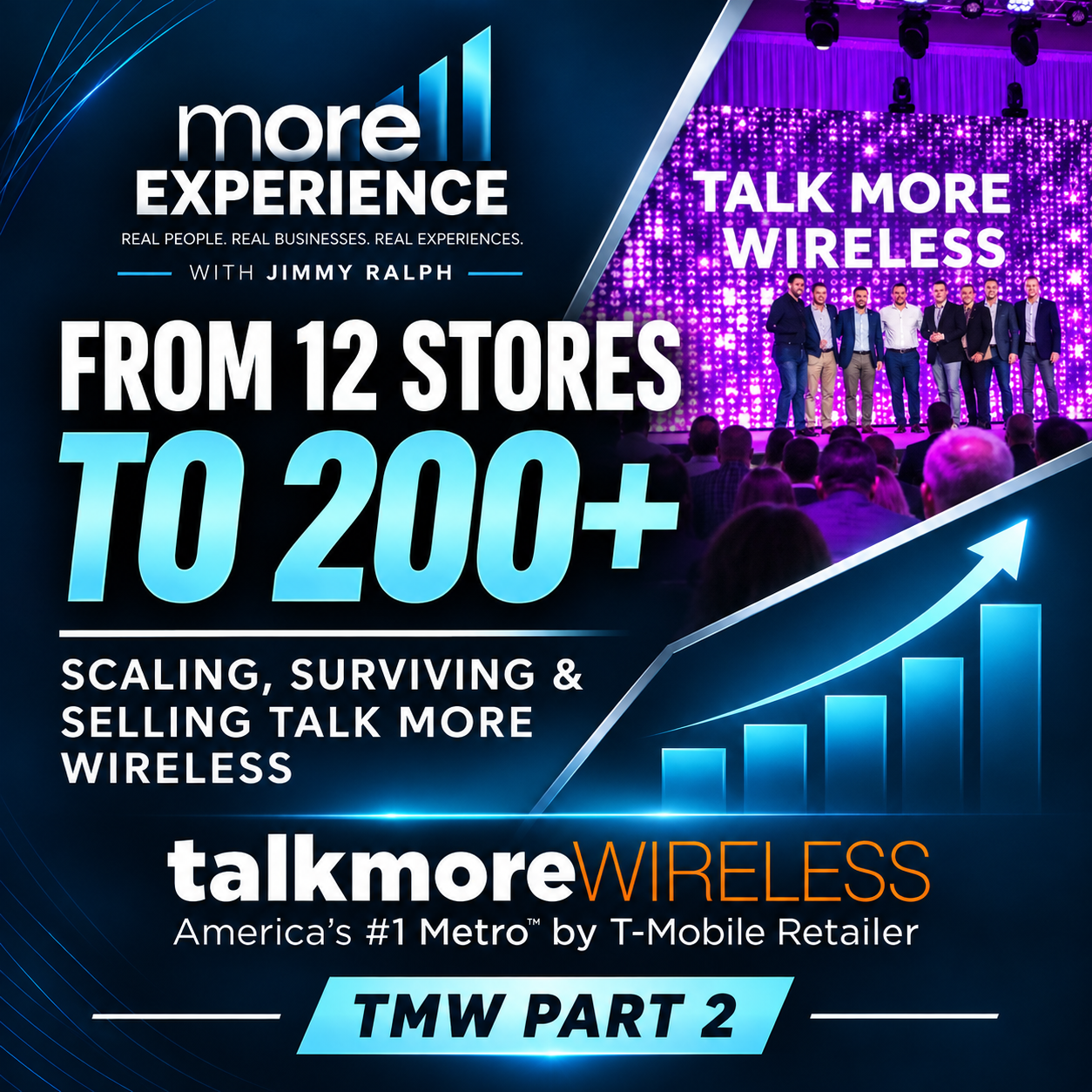
One of the most rewarding experiences was growing Talk More Wireless (TMW) from approximately a dozen MetroPCS locations into one of the largest Metro by T-Mobile retail organizations in the United States.
We built an operation spanning more than 200 stores, completed approximately 30 acquisitions, developed a management team capable of operating across multiple states, and created an employee culture that consistently earned recognition from our carrier partners.
But the journey was far from predictable.
In 2020, we found ourselves facing a global pandemic that threatened nearly every aspect of our business. We had to protect employees, maintain operations, navigate different government regulations, and continue serving customers who depended on their phones to communicate with family, friends, and essential services.
At the same time, we recognized opportunities to expand through acquisitions while other businesses were struggling to remain operational.
That period tested everything we’d spent years building.
In this episode of More Experience, I discuss the final chapter of Talk More Wireless, including our response to COVID-19, the systems that made rapid expansion possible, the importance of investing in employees, and the lessons learned from eventually selling the business.
It’s a story about scaling a multi-location business, but more importantly, it’s about how leadership, preparation, and relationships determine whether a company can respond effectively when the unexpected happens.
When COVID-19 Changed Everything
By the beginning of 2020, Talk More Wireless had grown to approximately 60 locations across the country.
We had already developed the systems, training processes, and management capabilities necessary to operate stores across multiple markets.
Then COVID-19 arrived.
Like everyone else, we were facing an extraordinary amount of uncertainty.
Nobody knew exactly what was coming, how long it would last, or what the implications would be for businesses and their employees.
From an operating perspective, we faced two immediate responsibilities.
First, we needed to protect our employees and customers.
Second, we needed to maintain access to wireless communications.
That second responsibility might not seem particularly unusual today, but think about what was happening at the time.
People were being told to stay home. Businesses were closing. Families were separated, and communities were trying to understand a rapidly changing situation.
For many people, their phones became an even more important connection to the outside world.
We understood that responsibility.
As I explained in the podcast:
“We had an obligation to our customers to make sure that they had their telephones.”
I’ve experienced similar concerns during hurricanes in Florida. When the power goes out or a natural disaster disrupts normal life, one of the first things people worry about is whether their phones will work.
We believed that maintaining access to wireless services was important enough to make every reasonable effort to continue operating safely.
But that created a difficult challenge.
How do you keep a national retail organization operating during a crisis when nobody has a clear playbook?
Protecting Employees While Keeping Stores Operational
Our first priority was developing procedures that could help protect the people working in our stores.
We invested heavily in personal protective equipment, cleaning services, and safety procedures.
Some of our cleaning operations were handled internally, while other services were outsourced.
We arranged for stores to be cleaned and sanitized overnight so employees could return to a prepared environment the following morning.
We also needed to source equipment that had suddenly become difficult to obtain.
Masks, gloves, and other protective supplies were in extraordinary demand.
Fortunately, our size and resources gave us advantages that smaller operators didn’t necessarily have.
We could purchase supplies in larger quantities, coordinate logistics across multiple markets, and use our business relationships to help obtain necessary materials.
But the biggest challenge wasn’t simply acquiring supplies.
It was managing uncertainty across a growing organization.
Different States, Different Rules
Our stores were spread across numerous states, counties, and municipalities.
During the pandemic, regulations could vary substantially between locations.
One state might impose strict operating restrictions while another allowed businesses considerably more flexibility.
Counties and cities sometimes had their own requirements.
We also had to consider policies established by our wireless carrier partners.
That meant our management team was constantly evaluating changing regulations, communicating with employees, and adjusting operations.
There wasn’t one universal policy that solved every problem.
We needed an organization capable of responding to different situations quickly.
Giving Employees Confidence
Throughout that period, we wanted our employees to understand that their well-being mattered.
We communicated that employees who were particularly vulnerable or uncomfortable returning to work could step away without being expected to put themselves at unnecessary risk.
We wanted them to know that we valued their contributions and intended to support them.
That philosophy had been part of our culture long before COVID-19.
The pandemic simply made it more important.
When employees believe their company genuinely cares about them, it creates a level of trust that becomes especially valuable during difficult times.
We were asking people to work through extraordinary circumstances.
They deserved to know that leadership was doing everything it reasonably could to support them.
How We Completed 24 Acquisitions in 18 Months
One of the most remarkable aspects of Talk More Wireless’s growth came during the same period that created some of our greatest operational challenges.
While many smaller retail operators were struggling through the pandemic, we were able to continue operating and pursuing strategic acquisitions.
Some business owners couldn’t maintain operations under the new restrictions.
Others decided that the challenges were simply too great and began considering an exit.
We recognized an opportunity to acquire additional stores and bring them into our operating system.
During the podcast, I discussed how we completed approximately 24 acquisitions in 18 months.
It was an extraordinary period of expansion.
But I don’t look at those acquisitions simply as an opportunity to buy businesses during a difficult time.
We were also expanding our ability to serve customers in markets where existing operators were struggling.
Acquiring those businesses allowed us to bring additional resources, experienced management, operational systems, and a broader organization into those locations.
Why Acquisitions Were Central to Our Growth Strategy
I’ve always been enthusiastic about mergers and acquisitions.
I like acquiring businesses with established operations, understanding their existing performance, and identifying ways to improve profitability through better execution.
That was a central part of our Talk More Wireless strategy.
When we acquired a group of stores, we weren’t simply purchasing a collection of locations.
We were acquiring an existing customer base, employee group, and operating business.
The opportunity was to apply the capabilities we’d spent years developing.
We could improve inventory selection, strengthen employee training, introduce more effective management systems, and enhance customer service.
Those improvements could create value that wasn’t being fully realized under the previous operating structure.
The real value of an acquisition often comes from what your organization can accomplish with the business after the transaction closes.
Of course, identifying opportunities is only one part of the equation.
You also need the ability to integrate them.
And that requires scalable systems.
The Operating Systems That Made Rapid Growth Possible
One of the biggest reasons Talk More Wireless could expand during challenging circumstances was that we’d spent years preparing the organization to operate at scale.
Long before COVID-19, we developed a system called Everpresent Management, or EPM.
That management system originated during our RBD and SalesMakers years, when we needed to oversee large numbers of employees working in different retail locations across the country.
Instead of relying exclusively on traditional field management, we developed technology-enabled processes that allowed us to communicate with employees, monitor operations, and reinforce company standards remotely.
Those capabilities became especially valuable during the pandemic.
Managing Stores Without Constant Physical Visits
Traditional retail management often involves district managers traveling between stores to inspect operations and coach employees.
There’s value in that approach, but it becomes difficult when you’re managing hundreds of locations across multiple states.
It’s even more challenging when travel is restricted.
EPM gave us a way to maintain communication and oversight without requiring management to be physically present at every location.
We could communicate with employees, reinforce policies, support store managers, and maintain consistent operating expectations.
As I explained during the interview, the system allowed us to maintain a strong communication stream with employees and management teams.
The objective wasn’t simply to monitor performance.
It was to make sure employees understood that they were part of a larger organization with resources available to support them.
Why Systems Become More Valuable as a Company Grows
One of the biggest mistakes entrepreneurs make when scaling a business is assuming that the management approach that worked at ten locations will work equally well at 100.
It usually won’t.
As a company expands, the number of employees, decisions, responsibilities, and potential operating problems grows significantly.
Without consistent processes, management becomes reactive.
You spend your time putting out fires instead of improving the business.
We had invested in systems designed to prevent that.
Those systems gave us the infrastructure to incorporate additional acquisitions and maintain a consistent customer experience.
The larger your organization becomes, the more important it is to build systems that can operate effectively without requiring the CEO to oversee every decision.
That lesson applies to nearly every industry.
Why Culture Was Just as Important as Technology
Technology alone doesn’t build a successful organization.
You still need employees who care about their work, managers who understand their responsibilities, and leaders who create an environment where people want to succeed.
At Talk More Wireless, we placed an enormous emphasis on company culture.
We wanted employees to understand that they were doing more than selling wireless phones.
They were helping customers stay connected to the people and services that mattered to them.
We also wanted employees to recognize that they had opportunities to build meaningful careers within our organization.
That became one of the most rewarding parts of the entire experience.
Creating Opportunities for Employees to Grow
As our company expanded, we needed more managers, trainers, merchandising specialists, and regional leaders.
We could have filled every position by recruiting experienced people from outside the business.
But we believed strongly in developing talent internally.
Some of our most successful employees began as frontline sales representatives.
They entered the company earning hourly wages and commissions.
Over time, through training, experience, and consistent performance, they advanced into store management, district management, and regional leadership positions.
Watching employees grow into those responsibilities was incredibly rewarding.
And it helped reinforce the culture we wanted to build.
When employees see colleagues advancing through the organization, they recognize that their own efforts can lead to meaningful opportunities.
That creates motivation and loyalty that can be difficult to manufacture through compensation alone.
Leadership Has to Be Visible
Another important part of our culture was making sure senior leadership remained connected to employees.
Our management team regularly visited stores and interacted with the people serving customers.
That included our leadership team, Kevin Killoran, Chris DiPasquale, my sons Trevor and Travis, and others responsible for different aspects of the operation.
It wasn’t unusual for senior executives to spend time in individual retail locations.
We wanted employees to know who was leading the organization and understand that their contributions were appreciated.
In the podcast, I emphasized why those relationships mattered:
“You’ve got to remember it’s all people. It’s all the relationships.”
You can create sophisticated strategies, financial models, and operating procedures.
But ultimately, the business succeeds or fails through the people executing those plans.
For us, that meant treating frontline employees as an essential part of the organization.
Building a Reputation for Retail Excellence
As Talk More Wireless grew, we became one of the largest Metro by T-Mobile retailers in the country.
But size wasn’t the only measure of success that mattered to us.
We also wanted to be recognized for the quality of our operations.
Operating under a major national wireless brand came with demanding expectations.
We had to follow pricing policies, merchandising requirements, promotional standards, and other carrier guidelines.
That could be challenging when competing against smaller operators who sometimes had more flexibility in how they managed their businesses.
But we believed we could compete by delivering a better customer experience.
We invested in inventory, employee development, store presentation, and customer satisfaction.
We wanted customers to walk into our locations and feel confident that they were dealing with knowledgeable professionals who cared about solving their problems.
Those efforts helped us earn repeated recognition from our carrier partners.
We received regional and national awards for retail performance and execution.
That recognition reflected the work of thousands of employees and the management teams supporting them.
It’s one thing to build a successful store.
It’s another to create an organization capable of delivering that same standard across hundreds of locations.
That’s what made the experience particularly rewarding.
Growing Beyond 200 Stores and Preparing for an Exit
As the organization continued expanding, we eventually grew beyond 200 retail locations.
Over the course of the company’s growth, we acquired approximately 30 businesses.
Not every acquired location was a perfect fit for the long term.
As our portfolio matured, we evaluated the performance of individual stores and made decisions about which locations should remain part of the organization.
That process helped us refine the business and focus on creating a strong, sustainable operating company.
We weren’t simply trying to maintain the largest possible store count.
We wanted a business that was profitable, operationally disciplined, and attractive to potential buyers.
Why Exit Planning Should Begin Before You’re Ready to Sell
One lesson I learned earlier in my career was the importance of building a business with the future in mind.
When you’re starting out, it’s easy to focus exclusively on revenue, payroll, and the next immediate challenge.
But as an entrepreneur gains experience, those questions need to expand.
What is the long-term objective?
Can the business operate effectively without the founder managing every detail?
Is there a clear path to growth?
And what would make the company valuable to a potential acquirer?
We approached Talk More Wireless with those considerations in mind.
Our management systems, operating procedures, financial discipline, and experienced leadership team all contributed to building a business that could eventually be acquired.
We knew that as one of the largest operators in the industry, there would likely come a point when we’d either make another significant acquisition or become an attractive acquisition target ourselves.
We were comfortable with either possibility.
The Decision to Sell
When the opportunity arose to sell Talk More Wireless, we evaluated it in the context of the business we’d built and the opportunities ahead.
We had grown from a relatively small portfolio of stores into one of the largest Metro by T-Mobile retail organizations in the country.
We had created a strong operating culture, developed talented employees, and established a reputation for excellence.
The sale represented the culmination of years of work.
I was particularly proud of the leadership team that helped make it possible.
Chris DiPasquale and Kevin Killoran played important roles in our capital strategy, acquisition activity, operating discipline, and the work required to position the company for a successful transaction.
We had built the business together through periods of rapid growth and significant uncertainty.
And we had accomplished something extraordinary.
What I Learned From Scaling a Multi-Location Business
Every entrepreneurial experience teaches you something.
Talk More Wireless reinforced lessons I’d learned through previous ventures while introducing challenges that came with operating a substantially larger organization.
Here are five of the most important takeaways.
1. Build the Infrastructure Before You Need It
Rapid growth creates pressure on every part of a business.
If your systems can’t support additional employees, locations, and operating complexity, growth can quickly become a liability.
Invest in management processes, technology, and training before those weaknesses become serious obstacles.
2. Acquisitions Require Operational Discipline
Buying a business is only the beginning.
The real work involves integrating employees, systems, inventory, customer relationships, and financial operations.
Have a clear plan for how the acquired business will become part of your organization.
3. Protect Your Culture as You Scale
A company can grow substantially and lose the qualities that originally made it successful.
Consistent communication, employee development, and visible leadership help maintain a shared culture across multiple locations.
4. Prepare for Circumstances You Can’t Predict
Nobody could have anticipated every challenge created by COVID-19.
But our previous investments in remote management systems, relationships, and organizational capabilities gave us options when the crisis arrived.
You can’t prepare for every specific event.
You can build a company that’s more capable of responding to unexpected situations.
5. Build With the Exit in Mind
A successful exit is rarely the result of one great decision made at the end.
It’s usually the product of years of disciplined execution, financial management, leadership development, and strategic planning.
Build an organization that someone else would want to own.
That mindset can improve the business long before any potential sale takes place.
The Greatest Reward Was the People We Built It With
When people hear about a company growing to more than 200 locations and completing dozens of acquisitions, they naturally focus on the numbers.
Those achievements are important.
But when I look back at Talk More Wireless, some of my favorite memories involve the people.
I think about the management team working long nights and weekends to integrate another acquisition.
I think about employees who began in entry-level positions and eventually became successful leaders.
I think about the store teams who worked through difficult circumstances to keep serving their communities.
And I think about the relationships that made the entire journey possible.
In the podcast, I described running Talk More Wireless as being similar to guiding a rocket ship.
The pace was extraordinary.
There were constant challenges, significant opportunities, and moments when it felt like the entire organization was moving at full speed.
But that’s part of what I love about entrepreneurship.
The opportunity to build something meaningful, surround yourself with exceptional people, and watch what becomes possible when everyone is working toward the same objective.
From Building Companies to Sharing More Experience
The sale of Talk More Wireless marked the end of an important chapter in my entrepreneurial career.
But it didn’t change my enthusiasm for building businesses, developing relationships, or helping other entrepreneurs succeed.
If anything, the experience reinforced how much valuable knowledge can be gained through years of making decisions, solving problems, and working with talented people.
That’s one of the reasons I created More Experience.
I want to share the lessons I’ve learned and have meaningful conversations with other entrepreneurs, business owners, CEOs, investors, and leaders who have their own experiences worth sharing.
Whether you’re opening your first location, evaluating an acquisition, managing a growing team, or preparing for an eventual exit, there’s always something to learn from people who have faced similar challenges.
The most important business lessons rarely come from a perfectly executed plan.
They come from understanding what happened when circumstances changed and how experienced operators responded.
Talk More Wireless taught me that scaling a multi-location business requires far more than ambition or access to capital.
It requires an organization built around people, relationships, systems, and a commitment to continuous improvement.
And when those elements come together, the opportunities can be extraordinary.
Real People. Real Businesses. Real Experiences.
Watch Talk More Wireless Part 2 on More Experience with Jimmy Ralph on YouTube, or listen on Spotify and Apple Podcasts, to hear the full conversation about navigating COVID-19, scaling through acquisitions, building a national retail organization, and achieving a successful exit.
By Jimmy Ralph | Entrepreneur, CEO of More³, and Host of More Experience
Want to stay up to date with Jimmy Ralph?
Follow Jimmy on LinkedIn | X (formerly Twitter) | YouTube | Instagram | Facebook for leadership insights, business lessons, behind-the-scenes updates, and more!
Follow the More Experience Podcast on: Apple Podcasts | Spotify | Youtube | X | Instagram | Facebook | LinkedIn
Follow More³ on: X | Instagram | Facebook | LinkedIn