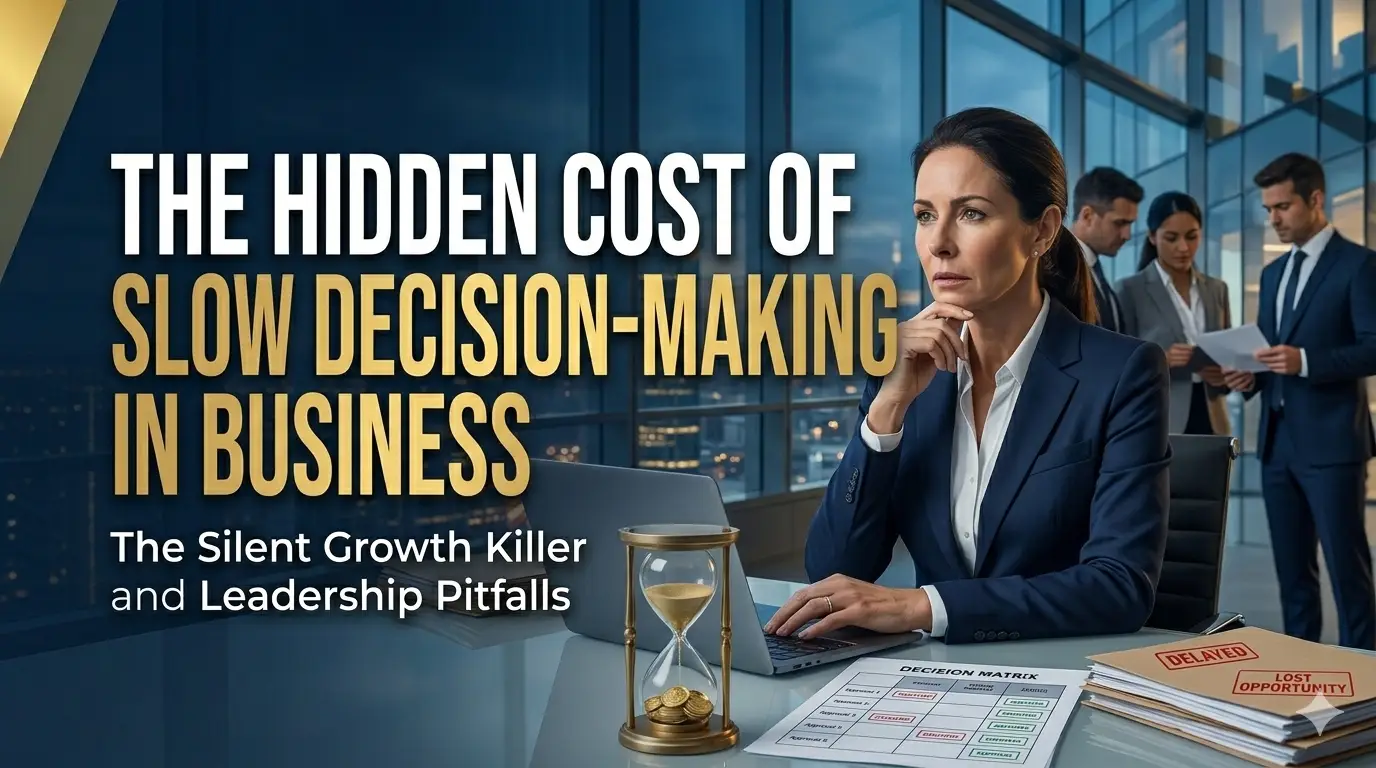
Why Speed Is a Competitive Advantage in Modern Business
In business, clarity matters. Discipline matters. Strategy matters.
But none of them compound without speed.
Markets move quickly. Technology evolves daily. Talent evaluates options constantly. Customer expectations shift without notice. In that environment, slow decision-making is not neutral. It is expensive.
Jimmy Ralph has built and scaled companies in highly competitive industries where hesitation creates opportunity for someone else. One consistent pattern stands out. Organizations that operate with speed outperform those that operate with caution disguised as prudence.
Speed is not recklessness. It is disciplined velocity.
The Financial Cost of Delay
When leaders delay decisions, costs accumulate invisibly.
Opportunities pass. Competitors act. Momentum fades.
The cost of slow decision-making includes:
- Lost revenue opportunities
- Talent attrition
- Competitive disadvantage
- Erosion of internal confidence
- Reduced market relevance
While slow decisions feel safe, they create hidden losses. Businesses rarely collapse because of one bad decision. They decline because of many delayed ones.
Jimmy’s leadership philosophy reinforces a simple truth. You can correct a wrong decision faster than you can recover from indecision.
Speed allows learning. Delay prevents it.
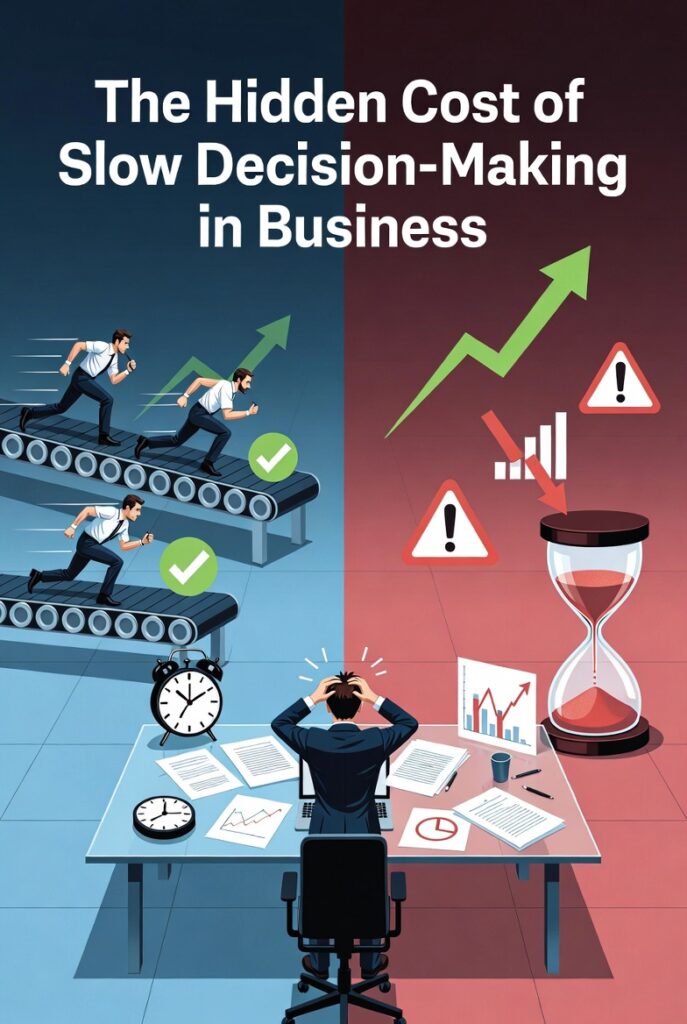
Why CEOs Hesitate
Slow decision-making rarely comes from incompetence. It often comes from fear.
Common reasons leaders hesitate include:
- Desire for perfect information
- Fear of public failure
- Concern over internal criticism
- Overanalysis
- Lack of clarity around financial impact
Perfectionism can become paralysis. Leaders wait for certainty that never arrives.
Jimmy often reminds CEOs that 100 percent clarity rarely exists. Leaders must make high-quality decisions with incomplete information.
Speed improves when leaders accept that uncertainty is part of the role.
The 70 Percent Rule: A Practical Framework for Speed
Elite operators understand that waiting for complete certainty slows progress.
A practical framework Jimmy supports is simple: when you have roughly 70 percent of the necessary information, make the decision.
If the decision is reversible, move even faster.
This principle increases speed without sacrificing responsibility. It forces leaders to separate decisions into two categories:
- Reversible decisions
- Irreversible decisions
Most business decisions are reversible. Treating every decision as permanent creates unnecessary hesitation.
Speed increases when leaders classify risk properly.
How Slow Decisions Undermine Team Confidence
Teams watch leadership tempo closely.
When decisions drag on, teams hesitate. They begin second-guessing priorities. They delay execution. Momentum weakens.
When leadership operates with speed, teams feel clarity. Direction becomes stable. Energy rises.
Jimmy has seen organizations transform simply by increasing decision velocity. Speed communicates confidence. Confidence reinforces execution.
Slow decisions communicate uncertainty.
Why Systems Increase Speed
Speed is not personality-driven. It is system-driven.
Organizations with strong systems make decisions faster because:
- Metrics are visible
- Financial data is current
- Roles are defined
- Authority levels are clear
- Performance is measurable
When systems create clarity, debates shorten.
Jimmy has consistently integrated scorecards and dashboards into operations to eliminate guesswork. Clear data reduces emotional friction.
Speed thrives in environments with structure.
The Link Between Speed and Learning
Speed compresses feedback loops.
When decisions are made quickly, results appear sooner. When results appear sooner, learning accelerates.
Organizations that move slowly delay learning. They operate on outdated assumptions longer.
Jimmy believes that speed is directly tied to adaptability. Companies that learn faster adjust faster.
Adaptability is a survival advantage.
Speed Without Recklessness
Some leaders confuse speed with impulsiveness. That is a mistake.
Disciplined speed includes:
- Clear guardrails
- Defined accountability
- Financial visibility
- Post-decision review
Speed does not eliminate analysis. It prevents analysis from becoming indefinite.
Jimmy’s operational approach emphasizes clarity before velocity. Once clarity exists, execution must follow quickly.
Speed without structure creates chaos. Structure without speed creates stagnation.
Elite organizations balance both.
The Opportunity Cost of Waiting
Every delayed decision carries opportunity cost.
Hiring delays cost revenue.
Expansion delays cost market share.
Investment delays cost strategic positioning.
While leaders debate, competitors act.
Jimmy has often observed that bold but calculated decisions create momentum. Momentum compounds. Delay erodes it.
Speed amplifies opportunity.
How Speed Protects Culture
Culture is influenced by tempo.
Fast-moving organizations develop a bias toward action. Problems are addressed quickly. Feedback loops are short. Accountability is direct.
Slow-moving organizations drift into analysis-heavy environments where execution lags behind discussion.
Jimmy reinforces that culture is shaped by behavior patterns. Speed is a behavioral signal.
When leaders act decisively, teams follow.
Why Speed Matters in CEO-Level Environments
At the highest levels, speed becomes even more critical.
CEOs manage complexity. They allocate capital. They shape long-term direction.
In rooms like Board of Advisors, high-level operators challenge each other to move faster, not slower. Peer-level accountability often exposes unnecessary hesitation.
Surrounding yourself with decisive leaders reinforces your own speed.
Environment influences tempo.
Practical Steps to Increase Speed Today
For leaders looking to increase decision velocity, consider these steps:
- Categorize decisions by reversibility.
- Establish time limits for analysis.
- Clarify authority levels within teams.
- Implement real-time performance dashboards.
- Conduct after-action reviews to refine judgment.
Speed improves through intentional design.
Jimmy believes that speed is not about moving frantically. It is about eliminating friction.
The Long-Term Impact of Speed
Over time, speed compounds.
Organizations that operate with speed:
- Innovate faster
- Correct mistakes sooner
- Retain ambitious talent
- Capture emerging opportunities
- Build competitive edge
Speed creates rhythm. Rhythm builds confidence. Confidence drives execution.
Jimmy’s leadership journey reflects this principle repeatedly. Speed has consistently been a force multiplier in growth phases.
Slow organizations react. Fast organizations shape outcomes.
Final Thought: Speed Separates Leaders from Followers
In uncertain markets, clarity matters. But speed determines who wins.
Elite leaders understand that slow decision-making carries real cost. They build systems that support speed. They accept calculated risk. They act before certainty becomes paralysis.
Jimmy Ralph’s approach is straightforward. Make informed decisions quickly. Learn rapidly. Adjust decisively.
Because in business, hesitation rarely protects you.
It positions someone else to move first.
Speed is not about rushing.
It is about refusing to stand still.
Lived By: Jimmy Ralph
CEO Board of Advisors
Interesting in joining the BA Community? bainvite.com
Want to stay up to date with Jimmy Ralph?
Follow Jimmy on LinkedIn | X (formerly Twitter) | YouTube | Instagram | Facebook for leadership insights, business lessons, behind-the-scenes updates, and more!
Visit Board of Advisors website
Board of Advisors magazine | Board of Advisors X | Board of Advisors Youtube | Board of Advisors Instagram
Shameless Plug time: If you’re in the St. Pete/Tampa area and need video/drone film services, check out my nephew’s company HR Video and Drone!