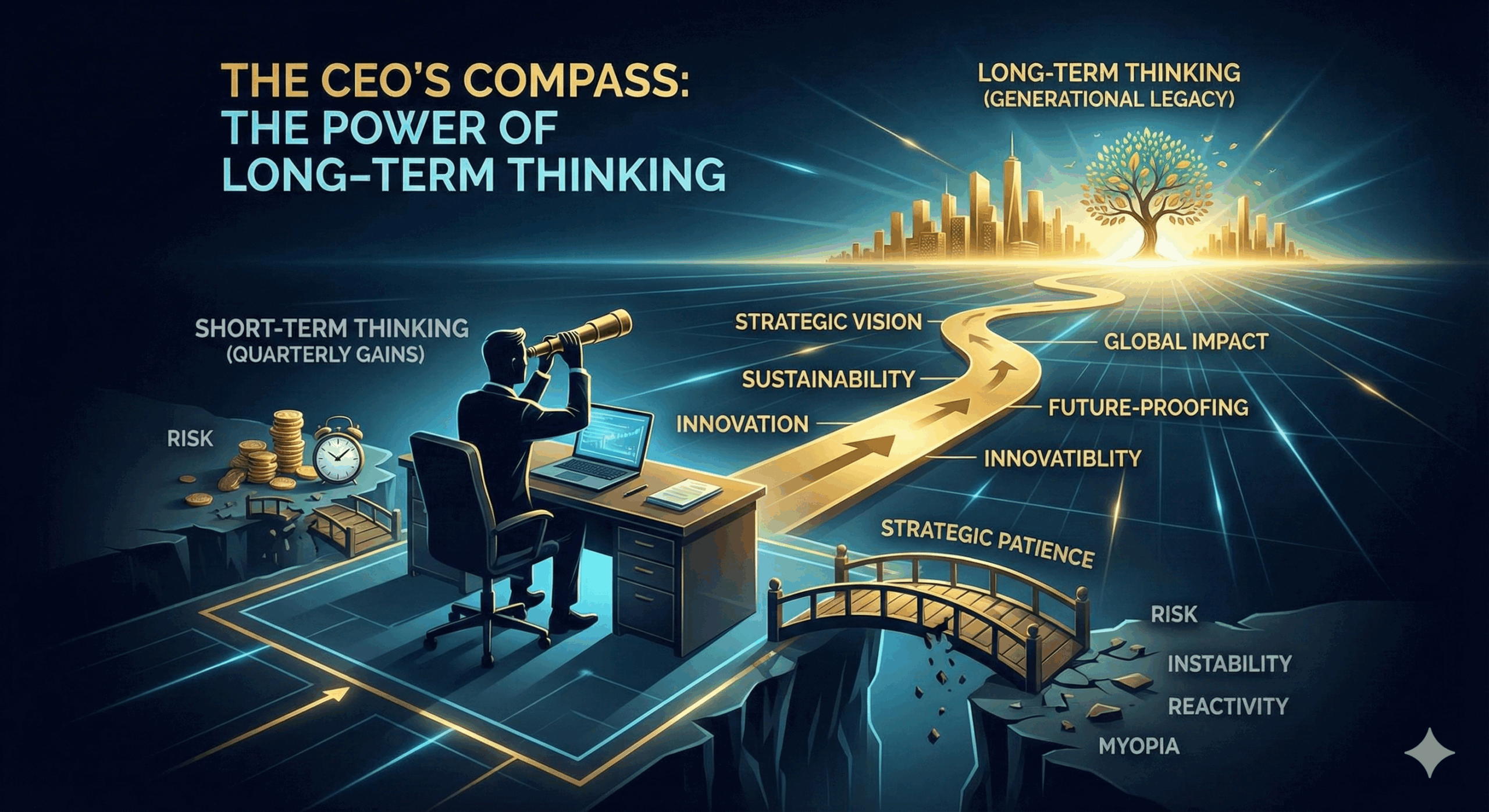
Why Do the Best Leaders Think Further Ahead Than Everyone Else?
Most people optimize for what feels good now. Strong leaders optimize for what wins later. That difference alone explains why some careers compound while others stall.
Long-term thinking is not passive. It is not slow. It is disciplined. It requires restraint, conviction, and patience in a world addicted to immediate results.
Jimmy Ralph’s career spans decades of building, scaling, and leading companies through multiple economic cycles. One lesson surfaced repeatedly: leaders who think long-term consistently outperform those who chase short-term wins.
Why Short-Term Thinking Is So Tempting
Short-term thinking offers fast feedback. It delivers quick validation, visible wins, and immediate relief. It also carries hidden costs.
Short-term focus often leads to:
- Reactive decisions
- Compromised standards
- Burned trust
- Team exhaustion
- Fragile growth
Leaders feel busy, but progress stalls. They win moments and lose momentum.
Long-term thinking requires patience, because results are not always visible right away. That delay is what makes it powerful and rare.
Patience Is the Discipline Behind Long-Term Success
Patience is not waiting. It is choosing not to overreact.
Leaders with patience:
- Resist panic
- Avoid constant pivots
- Protect standards
- Stay committed to strategy
- Allow systems to mature
Jimmy’s leadership philosophy emphasizes disciplined patience. He builds systems knowing they will not pay off immediately, but will outperform over time.
Patience is what allows leaders to stay consistent when others abandon the process too early.
Why Long-Term Leaders Win in Uncertain Environments
Uncertainty exposes leadership weakness. When pressure rises, short-term thinkers scramble. Long-term thinkers stay grounded.
Long-term thinking provides:
- Stability
- Confidence
- Direction
- Trust
Teams feel safer when leadership does not react emotionally. Customers trust brands that behave predictably. Partners respect leaders who don’t chase trends.
Patience becomes a stabilizing force when everything else shifts.
How Long-Term Thinking Protects Culture
Culture erodes when leaders sacrifice standards for speed or comfort. Short-term decisions often undermine long-term culture.
Examples include:
- Keeping low performers to avoid conflict
- Cutting training to save money
- Overpromising to close deals
- Ignoring values under pressure
Leaders with patience protect culture even when it costs them short-term wins. Over time, culture repays that discipline many times over.
Jimmy has always prioritized culture because he understands its compounding effect.
Why Patience Separates Builders from Chasers
Builders think in years. Chasers think in quarters.
Builders invest in:
- People
- Systems
- Training
- Leadership development
- Reputation
Chasers focus on optics, shortcuts, and urgency.
Patience allows builders to stay focused while others burn out. It creates durable advantages that are hard to copy.
Jimmy’s success was never built on shortcuts. It was built on patient execution and long-term discipline.
How Long-Term Thinking Improves Decision Quality
Decisions look different when viewed through a long-term lens.
Leaders who practice long-term thinking ask:
- Will this decision still make sense in three years?
- Does this protect our standards?
- Does this build trust or erode it?
- Does this create leverage or dependence?
Patience creates better filters. Leaders stop chasing noise and start reinforcing strategy.
This is how consistent winners think.
Why Long-Term Leaders Attract Better People
High performers are drawn to stability and vision. They want to work for leaders who think beyond the next crisis.
Long-term leaders attract:
- Committed operators
- Strong managers
- Thoughtful partners
- Loyal teams
Patience signals confidence. Confidence attracts talent.
Jimmy’s organizations consistently attracted strong leaders because they trusted the long-term direction.
The Compounding Power of Patience Over Time
Small decisions made consistently compound. Long-term thinkers benefit from this effect.
Patience compounds through:
- Trust built over time
- Skills developed gradually
- Systems refined through repetition
- Relationships strengthened through consistency
This compounding is invisible early and undeniable later.
Most people quit before the curve bends. Long-term leaders stay the course.
Why Long-Term Thinking Requires Courage
Patience is uncomfortable. It requires leaders to withstand doubt, criticism, and delayed validation.
Short-term wins are celebrated quickly. Long-term discipline often goes unnoticed until results become undeniable.
Courage allows leaders to:
- Stick with strategy
- Say no to distractions
- Absorb pressure
- Trust the process
Jimmy’s leadership reflects this courage. He stayed disciplined when others chased trends.
How Leaders Develop Long-Term Thinking
Long-term thinking is practiced, not inherited.
Leaders develop it by:
- Setting multi-year goals
- Measuring progress realistically
- Reducing emotional decisions
- Protecting non-negotiables
- Surrounding themselves with disciplined peers
Patience becomes easier when leaders operate inside environments that reinforce long-term discipline.
This is one reason strong mastermind communities matter.
Why Patience Is the Ultimate Competitive Advantage
Most competitors give up early. They pivot too often. They sacrifice standards. They chase shortcuts.
Leaders with patience outlast them.
Patience allows leaders to:
- Execute consistently
- Build trust
- Develop people
- Refine systems
- Compound results
Over time, the gap becomes impossible to close.
Final Thought: Long-Term Thinking Is How Legacies Are Built
Short-term thinking wins moments. Long-term thinking builds legacies.
Jimmy Ralph’s career demonstrates that durable success is rarely explosive. It is earned through discipline, consistency, and patience over time.
If you want to build something that lasts, slow your reactions and extend your horizon. Let others chase urgency. Focus on endurance.
Patience is not passive.
It is powerful.
And in leadership, it is a superpower.
Want to stay up to date with Jimmy Ralph?
Follow Jimmy on LinkedIn | X (formerly Twitter) | YouTube | Instagram | Facebook for leadership insights, business lessons, behind-the-scenes updates, and more!
Visit Board of Advisors website
Board of Advisors magazine | Board of Advisors X | Board of Advisors Youtube | Board of Advisors Instagram